Vedere House
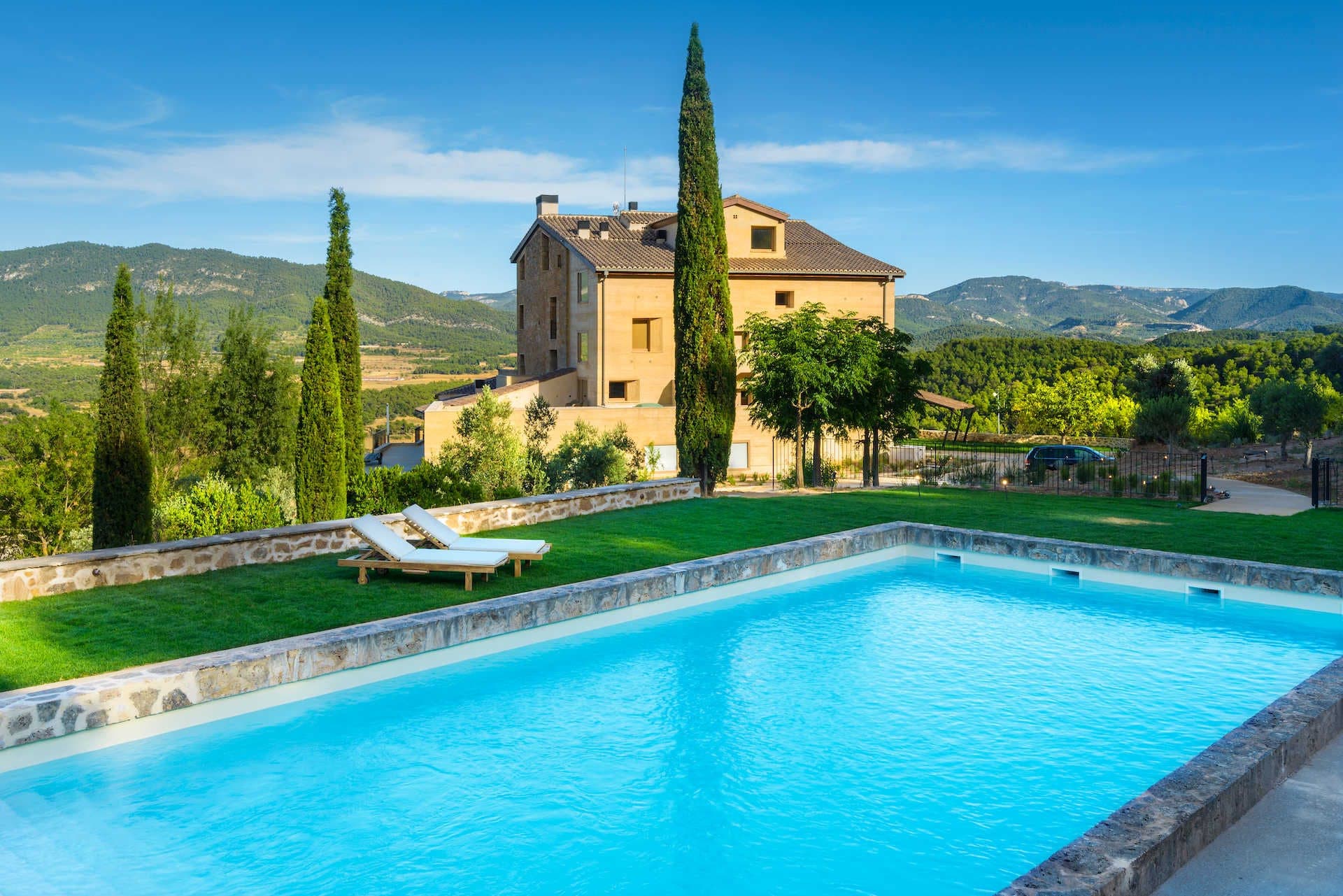
The pale Aragonese stone of Torre del Marqués reflected in the manor's pool at the height of the afternoon.

Matarraña · Aragón

Torre del Marqués

A 1702 manor of the Marqueses de Santa Coloma, restored as a five-star hotel in the Matarraña — eighteen rooms in pale Aragonese stone, the Atalaya del Tastavins kitchen, four…

The verdict

A 1702 manor of the de la Torre family, restored quietly into eighteen rooms in the Matarraña — the slow corner of Aragón that Spain's bigger maps still mostly skip. The estate is vineyard, olive, garden and pine; the kitchen reads from all four.

From the editors · Vedere House

The particulars

Style
1702 manor of the Marqueses de Santa Coloma
Estate
A working farm of vineyard, olive grove and pine forest in the Matarraña
Rooms
Eighteen, in the manor — plus Villa Natalia eight minutes away
Table
Atalaya del Tastavins, with four outdoor gastronomic corners across the estate
Wines
Cariñena, Macabeo and Garnacha — the estate's own
Wellness
Spa with indoor pool and treatment rooms
Setting
At the edge of the Ports de Beceite Natural Park
Best for
A long quiet week in the Matarraña, between Zaragoza and Tortosa
Season
April through October; vintage in September

The road into Monroyo narrows before it reaches the village, then narrows again. Torre del Marqués sits at the end — a low manor in pale Aragonese stone, raised by Juan de la Torre y Grau in 1702 and held by his line ever since. The grounds are vineyard, olive grove, kitchen garden and pine forest; behind them, the Ports de Beceite, one of Spain's quietest natural parks, close the view.

The family's lineage runs through every Spanish century. An ancestor stood at the Cid's side at Tévar in 1090; another commanded galleys at Lepanto under Felipe II; the marquesado of Santa Coloma was conferred in 1684. The manor itself opened as a hotel only recently — eighteen rooms, kept inside the original walls.

The Atalaya del Tastavins kitchen reads from the estate's own land — walled garden, vineyards, forest, the lookout above the Tastavins river. Lunch can be taken at any of the four; vines on three sides, or pine. The wine is the estate's own — fifty-year-old Cariñena and young Garnacha.

Eighteen rooms, a spa, a long path through the forest, a slower pace than the rest of Spain. The Matarraña is one of those regions that doesn't quite show up on the bigger maps. Stay a long week and that becomes the point.

Signature moments

The manor of Torre del Marqués in pale eighteenth-century stone, light falling on its low façade in the late Aragonese afternoon.

01

The manor and its lineage

The masía was built in 1702 by Juan de la Torre y Grau, on land won three centuries earlier by an ancestor at the Cid's side. The family carried Spanish military history through Lepanto and Flanders, and the marquesado of Santa Coloma since 1684. The room you sleep in is older than most countries you've visited.

An outdoor table set among the estate's vines, a "gastronomic corner" laid for lunch under the Aragonese sun.

02

Atalaya del Tastavins, the kitchen

The kitchen reads from the estate — vineyard, walled garden, forest and the lookout above the Tastavins river — and lays the table in any of the four. The chef pours the estate's own Cariñena, and walks the rows it came from before service.

The estate's vineyards in autumn, old Cariñena vines running across the slope above the Tastavins valley.

03

The Matarraña, beyond the gate

The hotel sits at the edge of the Ports de Beceite Natural Park, one of the quietest corners of the Iberian peninsula. Walk an hour from the gate and the country looks the same as it did when Felipe V drew the borders.

Inside the house

A panoramic view of the manor's bar, low light on polished wood and pale stone.
The estate's walled kitchen garden, beds of herbs and produce in summer.
The spa at Torre del Marqués, an indoor pool held in pale stone under low light.
A junior suite at the manor, restored beams above pale linen and a wide window onto the Aragonese light.

Return to

Le Carnet